This off-season the Atlanta Hawks were very busy making moves to bolster their roster in hopes to make a championship run. One of these moves being trading for Kristaps Porziņģis from the Boston Celtics as a part of a three-team trade with the Brooklyn Nets. While the on-court fit is clear, the more impactful story lies in how its affects each teams salary cap. Below I have gone over the trade in detail highlighting how this affects each team’s salary structure, flexibility, and long-term options.
What Each Team Received
Hawks receive:
- Kristaps Porziņģis (from Boston)
- 2026 second-round draft pick (via Boston)
Celtics receive:
- Georges Niang (from Atlanta)
- 2031 second-round pick (from Atlanta)
- Cash considerations (via Brooklyn)
Nets receive:
- Terance Mann (from Atlanta)
- Drake Powell (No. 22 overall pick)

Why the Hawks Made This Move
For Atlanta, landing Porziņģis fills a long-standing need in the frontcourt: a true rim-protecting big man who can stretch the floor. Porziņģis’ 7-foot-2 frame and elite shooting from beyond the arc make him a unique weapon in today’s NBA, and the Hawks are betting that pairing him with Trae Young, Jalen Johnson, and the rest of their emerging young core helps push their championship hopes. This is further amplified by the uncertainty across the Eastern Conference due to multiple major injuries.
Beyond the on-court fit, this move makes sense for Atlanta because of its contract structure. Porziņģis is on an expiring deal, allowing the Hawks to add high-end frontcourt production without committing long-term salary or drifting toward apron constraints. By acquiring him via trade rather than using a TPE or the mid-level exception, Atlanta preserves key roster-building tools and avoids any hard-cap triggers under the new CBA. The result is a short-term talent upgrade that maintains flexibility and multiple exit paths depending on how the season unfolds.
Financially, Porziņģis carries a $30.7 million salary for the 2025-26 season, but his contract is fully expiring, meaning Atlanta did not add long-term guaranteed money to the books. This allows the Hawks to add high-level talent without committing future cap space, preserving flexibility as they navigate apron thresholds in upcoming seasons. The expiring structure keeps multiple paths open: Atlanta can retain Porziņģis, explore an extension, or allow the salary to come off the books entirely next summer.
Celtics Continue Second-Apron Reset
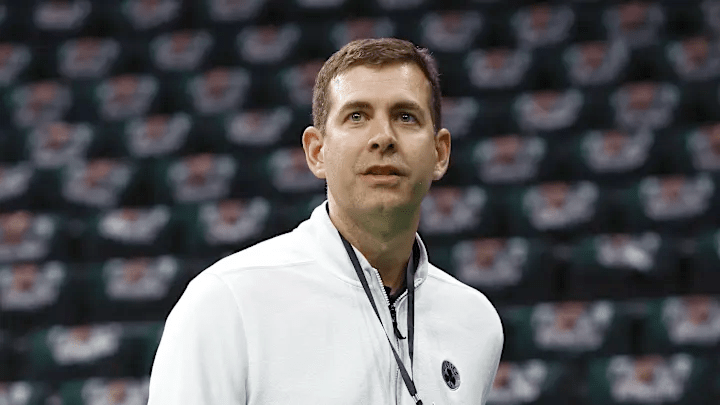
For Boston, this move represents another deliberate step in getting under the second luxury tax apron, rather than a basketball-driven roster upgrade. Earlier in the offseason, the Celtics had already swapped Jrue Holiday’s larger long-term contract for Anfernee Simons, a move designed primarily to reduce future guaranteed money and regain financial flexibility.
Moving Kristaps Porziņģis’ salary continues that same strategy. By sending out Porziņģis and taking back Georges Niang’s smaller, expiring deal, Boston further trims its team salary and eases the cumulative pressure created by max-level commitments to Jayson Tatum and Jaylen Brown.
From a cap perspective, this move was critical for Boston. Following the Porziņģis trade, the Celtics project to have approximately $206.6 million in total 2025-26 salary commitments, which places them about $4.0 million above the first apron ($195.9M) but roughly $7.8 million below the second apron ($207.8M). Getting below the second apron is significant, as it removes the most restrictive roster-building penalties under the new CBA while still allowing Boston to remain competitive at the top of the East.
This transaction helps Boston:
- Reduce apron-related restrictions on future trades and signings
- Avoid second-apron penalties such as frozen draft picks and aggregation limitations
- Maintain flexibility as they navigate Tatum’s recovery and reassess roster construction
Rather than signaling a shift away from contention, the Celtics are clearly prioritizing long-term cap compliance and optionality, sequencing multiple moves to realign their payroll while keeping the core intact.
Nets: Asset Consolidation and Flexible Depth
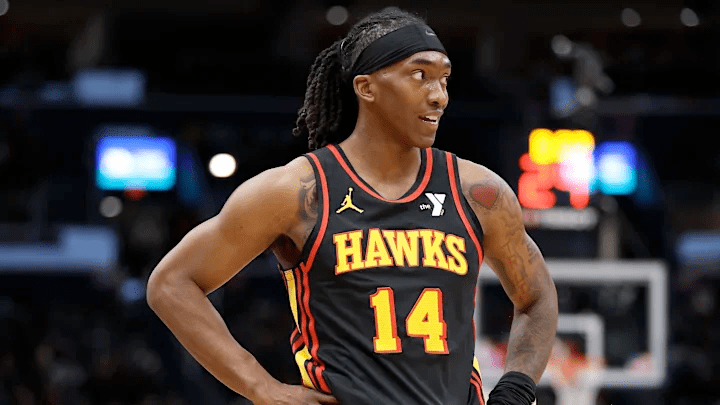
For Brooklyn, this transaction functions as a classic asset consolidation move, aligning with a roster that remains flexible rather than fully committed to a short-term competitive window. By entering the deal as the third team, the Nets were able to absorb and redirect salary while extracting both immediate rotation depth and future draft value, while only giving up cash considerations.
The Nets came away with Terance Mann, a proven, switchable wing on a mid-sized contract, along with the No. 22 overall pick, which was used to select Drake Powell. From a team-building standpoint, this balances near-term competence with long-term upside, allowing Brooklyn to remain competitive without sacrificing optionality.
From a cap and roster construction perspective, the move:
- Adds a tradable, medium-salary contract in Mann, useful both on the court and as matching salary in future deals
- Converts participation in a multi-team transaction into draft capital without taking on long-term financial risk
- Preserves flexibility as Brooklyn continues to evaluate its long-term direction
Rather than committing to a specific timeline, Brooklyn is effectively stockpiling flexible assets (players and picks that can be retained, developed, or rerouted as opportunities arise). In the current CBA landscape, where flexibility and contract structure often outweigh raw talent accumulation, this type of depth-and-draft return reflects a disciplined, optionality-driven approach.
Final Takeaway
This three-team trade is a strong example of how the new CBA is actively shaping front-office behavior across the league. Atlanta leveraged its flexibility to acquire high-impact talent without long-term risk, Boston continued a deliberate sequence of moves to step away from the second apron and restore team-building tools, and Brooklyn used financial capacity to quietly accumulate flexible assets.
Rather than a single “winner,” the deal highlights how success under the current system depends on contract structure, sequencing, and optionality as much as on talent evaluation. As apron restrictions tighten and pathways to roster improvement narrow, trades like this are increasingly less about star acquisition and more about who controls flexibility when it matters most.
Thank you for reading.
— Armaan Sharma
 Armaan Sharma
Leave a comment